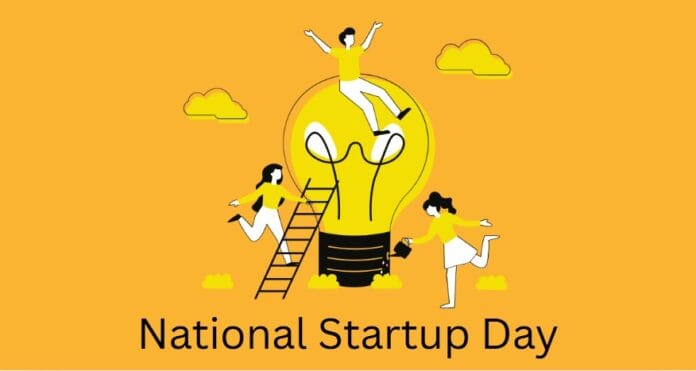
January 16, 2025: National Startup Day 2026 arrives with a different kind of energy, less about celebration alone and more about transition, most importantly where the startup energy is heading next. Ten years after the launch of Startup India, the country’s entrepreneurial landscape is no longer defined only by early‑stage enthusiasm. It is entering a phase where founders are thinking deeper, building slower, and choosing sectors that shape long‑term national priorities.
The Prime Minister captured this shift in his message on X, writing, “Best wishes to everyone associated with the world of StartUps on the occasion of National Startup Day. Today is special because we mark the 10th anniversary of the launch of Startup India. This day is about celebrating the courage, spirit of innovation and entrepreneurial zeal of our people, especially our youth, who have powered India’s rise in the global StartUp ecosystem.”
That spirit of innovation is now expanding into areas that will define India’s next decade of growth.
National Startup Day 2026 Marks a Decade of Startup Maturity in India and The Rise of New‑Age Sectors
India Marks 10 Years of Startup India with Over 200,000 Ventures, a milestone that reflects how deeply entrepreneurship has taken root across the country. What began as a policy push in 2016 has grown into a nationwide movement that now shapes how young Indians think about ambition, risk, and innovation. The initiative has helped India emerge as the world’s third‑largest startup hub, generating millions of direct jobs and attracting significant private investment.
A noticeable change in 2026 is the kind of problems founders are choosing to solve. The spotlight is shifting from consumer apps to sectors that strengthen India’s economic backbone.
Semiconductors: With India pushing for chip manufacturing independence, startups are emerging in design, testing, packaging, and specialised hardware. These ventures may not be glamorous, but they are essential for the country’s technological future.
Aquaculture: As global demand for sustainable protein rises, aquaculture is becoming a high‑impact sector. Technology‑driven farming, water‑quality intelligence, and climate‑resilient systems are drawing young founders into what was once a traditional industry, to drive the national blue revolution goals.
Managed and Flex Workspaces: As hybrid work becomes the norm, flexible office ecosystems are evolving into business‑enabling platforms. They are no longer just about desks, they are about community, collaboration, and operational support for early‑stage teams.
Sundari Patibandla, founder of iSprout, sees this shift firsthand. She notes, “Founders today want more than infrastructure. They want spaces that adapt to their pace of growth and give them room to think, innovate, experiment, and build without friction.”
Her perspective reflects a broader truth as we celebrate National Startup Day 2026: the next phase of India’s startup journey will be shaped by environments that support long‑term creation, not just short‑term hustle. iSprout is charting a new era of flex and managed spaces with integrated centers that helps entrepreneurs and enterprises to focus on innovation.
In the aquaculture space, the transformation is equally striking. Aditya Rithvik Narra, founder of SmartGreen Aquaculture, explains, “Aquaculture is moving from traditional practices to data‑driven RAS systems. When technology enters food and water ecosystems, the impact becomes immediate and meaningful for communities.”
His words underline why sectors like aquaculture are gaining attention, they solve real problems for real people. SmartGreen Aquaculture (SGA), a Hyderabad, India-based startup, has launched the largest inland trout farm in India, successfully leveraging cutting-edge aquaculture technology in order to farm the coldwater species in a tropical climate.
“National Startup Day 2026 reminds us that every young company begins with a story waiting to take flight. When founders shape that story with clarity and purpose, their brand becomes more than an identity, it becomes a force that carries their vision forward.”, says Nishant, Founder of enkaey, which crafts unique UI/UX solutions and engaging Stories for brands.
The first decade of Startup India built confidence. The next decade will build capability.
Founders are no longer chasing speed alone. They are chasing relevance, sustainability, and the ability to solve problems that matter at scale. National Startup Day 2026 marks this transition, a moment where India’s entrepreneurial story moves from excitement to maturity.
LENR technology is gaining early attention as India looks for cleaner and more reliable energy options. Its promise of abundant and eco‑friendly power makes it a space where scientific innovation and long‑term national benefit can come together.
Space and defence tech are also emerging as priority sectors, with startups contributing to satellites, autonomous systems, and mission‑critical tools. As India strengthens its space and security capabilities, these areas are becoming important destinations for founders building for national relevance.
As we kick off the National Startup Day 2026, it is a new year, and a new beginning. The country is stepping into a phase where innovation is not just celebrated but expected. And that expectation is pushing founders to think bigger, dig deeper, and build for a future that extends far beyond the next funding round.

