

November 3, 2206: As artificial intelligence finds a place in tuberculosis screening programmes across more than 100 countries, Mumbai-based Qure.ai is demonstrating how technology developed in India could help address some of the most persistent gaps in global healthcare.
Tuberculosis remains one of the world’s most pressing public health challenges, but detecting the disease early continues to be a hurdle, particularly in regions where access to radiologists and diagnostic infrastructure is limited. Artificial intelligence is beginning to offer a way to address this gap, turning routine chest X-rays into an opportunity for faster, more accessible screening.
Among the companies working in this space is Mumbai-based healthtech startup Qure.ai, whose artificial intelligence-powered chest X-ray interpretation software, qXR, is one of three computer-aided detection solutions evaluated by the World Health Organization (WHO) for tuberculosis screening.
The WHO’s recognition of AI-assisted chest X-ray interpretation in its TB screening guidance reflects a significant shift in how the global health community is approaching disease detection. It also signals the growing role of technology in extending diagnostic capabilities beyond conventional healthcare settings.
For Qure.ai, the opportunity goes beyond developing an algorithm that can identify signs of tuberculosis. It is about making early detection possible at a much larger scale, including in communities where specialist medical expertise is difficult to access.
Qure.ai Bringing diagnostic intelligence closer to patients
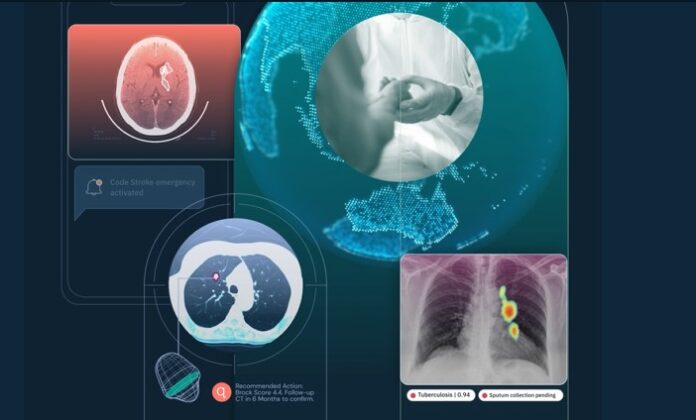
Qure.ai’s flagship product, qXR, can analyse a chest X-ray in approximately 20 seconds, identifying abnormalities across multiple anatomical regions, including the lungs, pleura, mediastinum, heart, diaphragm and bones.
In tuberculosis screening programmes, the technology can help healthcare workers identify individuals who require further clinical evaluation. By automating the initial interpretation of chest X-rays, it can reduce dependence on the availability of radiologists at every screening location.
The distinction is important for public health systems. In many low- and middle-income countries, the challenge is not simply the absence of screening programmes but the shortage of trained professionals who can interpret diagnostic images quickly enough to support large-scale screening.
AI-assisted interpretation offers a way to increase screening capacity while allowing medical professionals to concentrate on clinical assessment, confirmation and treatment decisions.
Qure.ai‘s technology is being used in national tuberculosis programmes across countries including Kenya, Mozambique and the Philippines. Its deployment in more than 100 countries points to the growing acceptance of AI-based diagnostic support across varied healthcare environments.
For health systems, the potential long-term benefit lies in making screening more consistent, improving the speed at which suspected cases are identified and reducing delays between initial screening and follow-up investigations. For patients, earlier identification could mean quicker access to confirmatory testing and treatment, helping reduce the risk of disease progression and further transmission.
AI does not replace microbiological confirmation or clinical judgement. Its value lies in helping healthcare systems identify those who need further investigation, sooner and at scale.
From tuberculosis screening to a broader diagnostic platform
Founded a decade ago, Qure.ai began with a focused ambition: use AI to interpret medical images and make diagnostic capabilities more widely available. That initial focus on tuberculosis has since expanded into a broader portfolio covering lung cancer, heart failure and chronic obstructive pulmonary disease (COPD), among other conditions.
Qure.ai’s qXR platform has 36 US Food and Drug Administration (FDA)-cleared findings across its applications, according to the company.
The expansion reflects a larger opportunity emerging in healthcare AI. Rather than building technology around a single disease, companies are increasingly looking at how diagnostic information from multiple sources can be brought together to support more informed clinical decisions.
Medical imaging is only one part of a patient’s health record. Clinical notes, pathology reports, patient histories and conversations with healthcare workers can provide additional information that may influence diagnosis and treatment.
Qure.ai is working towards integrating these different data points into a more comprehensive diagnostic support system.
Its AIRA product, for instance, uses voice technology to capture conversations between healthcare workers and patients, automatically generate notes and provide recommendations. The broader ambition is to reduce administrative workloads while helping clinicians access relevant patient information more efficiently.
This could have implications beyond diagnostic accuracy. Healthcare professionals often spend considerable time documenting consultations and navigating fragmented patient records. Better integration of clinical information could allow them to devote more time to patient care, while supporting continuity across different stages of treatment.
A business built around two healthcare markets
Qure.ai’s business has also evolved across two distinct markets. Tuberculosis screening accounts for approximately half of its revenues, while the other half comes from AI applications addressing conditions such as cancer, heart failure and COPD in developed markets, particularly the US, according to the company.
This dual-market presence offers an interesting business model for Indian healthtech innovation. Solutions developed to address resource constraints in emerging economies can also find applications in advanced healthcare systems, where the priorities may include efficiency, workflow optimisation and improved diagnostic support.
The company is also exploring applications in infectious diseases such as HIV, although these products are not yet commercial. Co-founder and CEO Prashant Warier has said in an interaction that the company’s long-term ambition is to impact one billion patients. It estimates that its technology has already reached 45 million people.
The scale of that ambition is significant, but its success will ultimately depend on more than the number of countries in which its software is deployed. Sustained clinical utility, integration into public health programmes, affordability and the ability to demonstrate meaningful improvements in patient outcomes will determine the technology’s long-term impact.
The economics of healthcare AI
Qure.ai has raised approximately $123 million from investors including Lightspeed, Sequoia India and Novo Holdings. The company is not currently planning another fundraise and is focusing on moving towards profitability.
Warier has indicated that the company expects to approach profitability within the next six months, although this remains a forward-looking projection. The emphasis on profitability comes at a time when several AI businesses are under pressure to demonstrate that their technology can translate into sustainable commercial models.
Healthcare AI, in particular, faces a different set of challenges from consumer-facing AI applications. Products must work reliably across different clinical environments, meet regulatory requirements and demonstrate value to hospitals, governments and healthcare providers.
For a company operating across more than 100 countries, this also means navigating different healthcare systems, infrastructure constraints and regulatory frameworks. The larger question is whether AI can move from being an additional technology layer to becoming an integral part of everyday healthcare delivery.
Beyond the algorithm: The long-term healthcare opportunity
The significance of AI-powered tuberculosis screening lies not merely in how quickly software can read an X-ray, but in what that speed can enable across the healthcare system.
In underserved regions, automated screening could help extend the reach of existing healthcare workers. In public health programmes, it could support larger screening campaigns and more systematic identification of people who need further testing. In hospitals, similar technologies could help manage diagnostic workloads and improve the flow of patients through clinical pathways.
For patients, the potential gains are earlier identification, fewer delays in accessing appropriate investigations and a better chance of receiving timely treatment. For healthcare systems, the benefits could include more efficient use of specialist resources, improved screening capacity and stronger links between diagnosis and care.
There are, however, important conditions for these gains to materialise. AI tools need to be validated across diverse populations, monitored for performance differences, integrated into clinical workflows and supported by accessible confirmatory testing and treatment services. Technology alone cannot close the healthcare gap if patients cannot access the next step in their care journey.
Qure.ai’s journey illustrates how an Indian startup can build technology around a pressing public health need and take it into international healthcare markets. Its evolution from a tuberculosis-focused screening tool to a broader diagnostic support platform also reflects the direction in which healthcare AI is moving.
The next phase of innovation will not be measured simply by how many images an algorithm can analyse or how quickly it can produce a result. It will be measured by whether that technology helps doctors make better-informed decisions, enables health systems to reach more people and, ultimately, improves the quality and timeliness of care.
That is where the real promise of healthcare AI lies: not in replacing medical expertise, but in making it available to more patients.
Fact-check disclaimer: Company-reported figures, WHO references, regulatory clearances, patient reach and business projections are subject to independent verification before publication. Clinical claims should be cross-checked against credible independent sources.

