

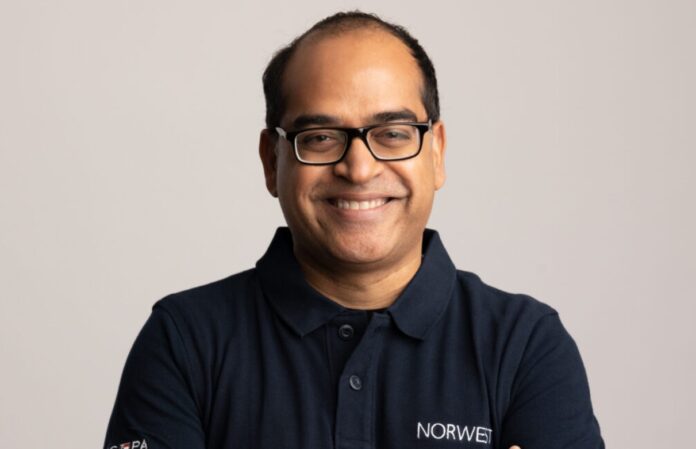
November 14, 2026: Norwest’s latest $4 billion fund is more than a milestone for a venture capital firm with a 65 year history. It also offers a glimpse into how investors are preparing for a startup market where raising capital is only the beginning, exits are taking longer and companies are under increasing pressure to demonstrate sustainable growth.
With the close of Norwest 18, its largest fund to date, the investment firm is positioning itself to remain involved across a company’s lifecycle, from early stage development to expansion and eventual liquidity. Its focus spans technology, healthcare and consumer businesses in the US, India and Israel.
The timing is significant. Venture markets are becoming more selective, particularly in India, where growing interest in artificial intelligence has not translated into a broader recovery in startup funding activity. Investors are increasingly concentrating capital in companies with stronger infrastructure, technology and commercial propositions, leaving businesses with less established revenue models facing a tougher fundraising environment.
For Norwest, the opportunity appears to lie in backing companies through these changing conditions rather than simply participating in their initial funding rounds. Norwest 18 follows the firm’s previous fund, Norwest 17, launched in April 2024. Since then, Norwest says it has made more than 87 investments and supported over 30 portfolio companies through liquidity events.
These include the stock market listings of Amagi Media Labs and Swiggy, alongside acquisitions involving Qualified by Salesforce and Veza by ServiceNow. That record offers an important context for the latest fund. In a market where venture investors are increasingly judged on their ability to return capital, portfolio exits are becoming as important as new investments.
The challenge is particularly relevant for companies staying private for longer. They need more capital to finance expansion, but investors must also wait longer to realise returns. This puts greater emphasis on business fundamentals, operating discipline and the ability to navigate successive stages of growth.
Senior Managing Partner Jeff Crowe said companies were facing increasingly complicated decisions around technology, talent and expansion as they operated across more markets.
Norwest’s $4 billion fund puts the focus on what comes next
Capital, he suggested, is only part of what businesses need. Long term support, industry experience and access to relevant networks have become equally important. This is also where Norwest’s multi stage investment model becomes central to its strategy. Rather than limiting its involvement to a particular funding stage, the firm wants to maintain relationships as companies grow and their requirements change.
Norwest’s investment strategy comes at an interesting point for India. AI startups in the country raised $1.6 billion in the first nine months of 2026, compared with $677 million during the corresponding period a year earlier. However, the number of funding rounds declined 43%. Four large transactions accounted for 72% of the total funding, highlighting how concentrated investor interest has become.
The contrast is important. More money is entering the AI ecosystem, but it is not reaching companies evenly. Infrastructure providers and model developers are attracting a disproportionate share of investment, while application focused startups face the harder task of converting technology interest into paying customers.
For a firm investing across stages, this creates both an opportunity and a challenge. The opportunity is to identify businesses that can build lasting commercial value around emerging technologies. The challenge is distinguishing companies with defensible business models from those benefiting mainly from the current enthusiasm around AI.
Recent Indian fundraises illustrate the range of opportunities attracting investors. Bengaluru based Even Healthcare raised $50 million in October from Khosla Ventures and Alpha Wave to expand its managed care and hospital operations. Wealth technology startup PowerUp Money raised $10 million in November, led by Flourish Ventures, to develop AI enabled wealth management services.
Both businesses point to a broader investment theme: the application of technology to established industries where customer needs and commercial demand already exist. Norwest expects artificial intelligence to create opportunities across its existing investment sectors, while also opening up new areas. Its areas of interest include financial infrastructure, physical and voice AI, cybersecurity for AI agents, industrial technology, aerospace and healthcare.
The firm’s investments in Beltic, Rain and Stablecore reflect its interest in payments and digital currency infrastructure. Its backing of LlamaIndex and Generalist AI points to the growing importance of intelligent systems and enterprise applications.
However, the wider investment question is not simply which AI technologies will attract the most attention. It is which businesses can turn those technologies into products that customers are willing to pay for, and build an advantage that lasts beyond the current funding cycle. That distinction could become increasingly important as more startups compete for a relatively concentrated pool of venture capital.
Government initiatives are also shaping the opportunity in India. The IndiaAI Mission has expanded shared computing capacity to more than 45,000 graphics processing units and selected 20 proposals for the development of indigenous foundation AI models. Meanwhile, the Cabinet’s approval of Semicon 2.0, with a proposed outlay of Rs 1.275 trillion, signals a broader push to develop domestic semiconductor design and manufacturing capabilities.
Together, these developments could create investment opportunities across computing infrastructure, chip design, industrial applications and enterprise technology. Norwest is also expanding its operating support network, doubling its Senior Advisor Network and introducing the Norwest Operator Collective and Norwest Kinetic.
The move reflects a growing recognition across venture capital that financial backing alone may not be enough to help companies navigate increasingly complex markets. Access to experienced executives, sector specialists and operating talent can become particularly valuable when businesses move from product development to larger scale operations.
Managing Partner Jon Kossow said the firm’s approach was built around maintaining long term relationships with businesses as their needs evolve. Its multi stage model allows Norwest to meet companies at different points in their development and continue supporting them as they expand.
The strategy is not without challenges. Investing across multiple sectors, geographies and funding stages requires disciplined capital allocation. A larger fund also raises expectations around deployment, portfolio performance and eventual returns. Norwest’s established presence in India, including its investments in OfBusiness and Swiggy and its Mumbai office, gives it an existing foothold in a market where technology investment is evolving rapidly.
But the bigger question is whether its relationship driven approach can consistently identify businesses that will remain valuable through changing funding cycles. The $4 billion close establishes Norwest’s financial capacity. What happens next will depend on how effectively it deploys that capital, supports its portfolio and converts a growing pipeline of technology opportunities into durable businesses.
In a venture market increasingly defined by selectivity, the size of a fund may attract attention. Its ability to deliver meaningful outcomes will ultimately determine its significance.

