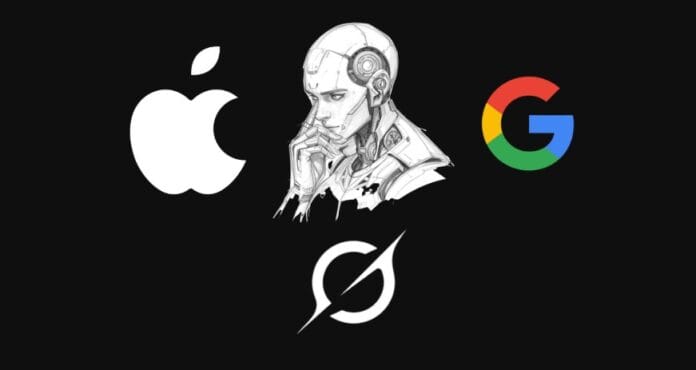
January 13, 2026: Apple’s multi‑year agreement with Google to use Gemini as the backbone for future Apple Foundation Models marks one of the most consequential strategic pivots in the company’s recent history. The deal positions Google not just as a search partner, but as a foundational AI supplier powering a more personalised Siri and upcoming Apple Intelligence features.
For a company that has long prided itself on vertical control, Apple’s decision signals something deeper: the AI race has become too fast, too expensive, and too strategically critical for even the world’s most valuable tech giant to tackle alone.
But Musk sees something else entirely.
Musk’s Alarm: A Power Shift Too Big to Ignore
Responding to Google’s announcement, Musk argued that giving Google control over the intelligence layer of Apple devices creates an “unreasonable concentration of power,” especially considering Google already dominates Android and Chrome.
His critique isn’t just philosophical. It’s competitive.
- Musk’s xAI is currently suing Apple and OpenAI over their earlier Siri–ChatGPT integration, claiming Apple’s App Store practices disadvantage rivals like Grok.
- The new Gemini deal further sidelines xAI from system‑level access to the iPhone—arguably the most valuable consumer tech platform in the world.
- And with Google now powering Apple’s AI core, Musk’s fears of a two‑player AI duopoly—Google and OpenAI—become more plausible.
Why Apple Chose Google Anyway
Apple’s internal AI delays are well‑documented. Siri has struggled for years with multi‑step reasoning, contextual understanding, and third‑party integration. Google’s Gemini offers a shortcut: a mature, scalable model that can immediately elevate Siri’s capabilities while Apple continues building its own long‑term AI stack.
Reports suggest the partnership could cost Apple around $1 billion per year, a price the company appears willing to pay to avoid falling further behind in the AI race.
The Strategic Trade‑Off
Apple insists that Apple Intelligence will still run on‑device or through its Private Cloud Compute, preserving its privacy guarantees. Google, in this arrangement, becomes the engine—not the driver.
But the optics are undeniable: Apple, the world’s most guarded ecosystem, is now outsourcing its intelligence layer to its biggest mobile rival.
The Bigger Question for Startups
For founders and early‑stage AI companies, this moment is a warning: If Apple can’t build fast enough to compete, what chance do smaller players have?
The Apple–Google deal suggests a future where foundational AI models consolidate under a handful of hyperscalers, while everyone else builds on top of them. Musk’s critique, stripped of rivalry, taps into a real concern: Are we heading toward an AI world where innovation is abundant—but ownership is concentrated?
That’s the question the startup ecosystem must grapple with.

