

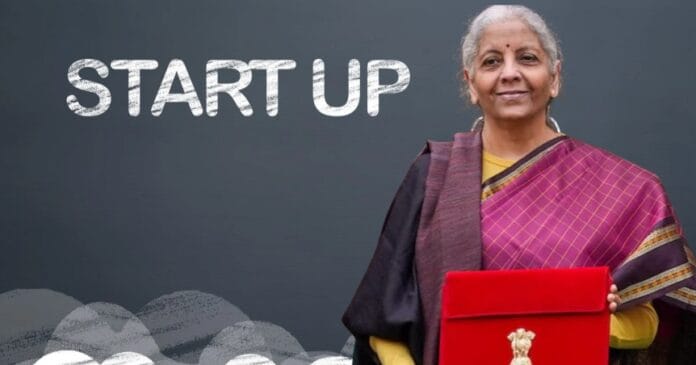
NEW DELHI, India, February 3, 2026: In a decisive move to transition India from a low-cost service hub to a high-value manufacturing and innovation powerhouse, Finance Minister Nirmala Sitharaman’s Union Budget 2026–27 has unveiled a massive capital infusion for startups, MSMEs, and frontier technologies.
The strategy pivots on three strategic pillars: deepening the domestic supply chain, democratizing the “Orange Economy,” and securing a global lead in the semiconductor and biopharma races.
Budget 2026: Strategic Funding and Tech Growth for MSMEs
Capital Infusion: The Triple Outlay Strategy
The government in its Budget 2026 has doubled down on its commitment to high-growth sectors with three distinct ₹10,000 crore allocations. The Fund of Funds for Startups (FFS) receives a fresh ₹10,000 crore boost to fuel early-stage ventures through SEBI-registered funds. Simultaneously, the new MSME Growth and Resilience Fund aims to shield smaller enterprises from global economic volatility, while Biopharma Shakti seeks to establish India as a global hub for biologics and biosimilars.
Electronics and Semiconductors: Playing for Depth
Moving beyond simple assembly, the Union Budget 2026 nearly doubles the Electronic Component Manufacturing Scheme (ECMS) outlay to ₹40,000 crore. This expansion follows a surge in private investment commitments that outpaced original targets.
Furthermore, India Semiconductor Mission (ISM) 2.0 has been greenlit. This second phase shifts the focus toward full-stack Indian Intellectual Property (IP) and the production of specialized equipment and materials, ensuring that “Made in India” increasingly means “Designed in India.”
The 2047 Vision: Cloud Sovereignty and the Creator Economy
In a bold play to capture the global AI and data backend market, the Finance Minister proposed a tax holiday until 2047 for foreign cloud service providers using Indian data centers for global operations. This move positions India as a direct competitor to traditional hubs like Singapore and Ireland.
On the human capital front, the Budget identifies the Orange Economy (creative industries) as a primary job engine. By supporting the Indian Institute of Creative Technologies, Mumbai, the government plans to embed AVGC (Animation, Visual Effects, Gaming, and Comics) labs in 15,000 schools and 500 colleges, targeting the creation of 2 million jobs by 2030.
Analysis: This Budget marks a shift from broad-based subsidies to “ecosystem architecture.” By focusing on deep-tech components, clinical trial infrastructure, and creative vocational training, the government is betting that specialized skills and domestic IP—rather than just cheap labor—will drive the next decade of growth.

