

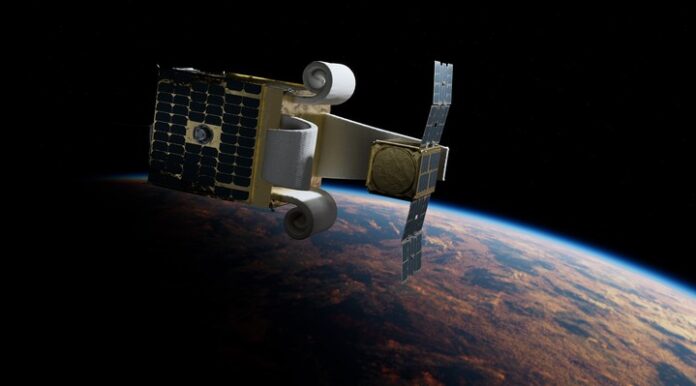
Hyderabad, November 5, 2026: India is stepping up its efforts to make outer space safer and more sustainable, with an ambitious target of achieving debris-free space by 2030. The country’s growing capabilities in active space debris removal are also positioning it among the early global pioneers in developing technologies to address the increasing challenge of orbital debris.
Union Minister of State for Science and Technology Dr. Jitendra Singh highlighted India’s progress in the sector while virtually addressing the inauguration of Cosmoserve Space’s Base 1 facility in Hyderabad on Thursday. He said the country’s emerging space technologies would contribute not only to national capabilities but also to the safety and sustainability of outer space for the benefit of humanity.
Located at VSD Tech Park in Gachibowli, the facility was inaugurated in the presence of Telangana IT and Industries Minister D. Sridhar Babu and Cosmoserve Space Founder and CEO Dr. Chiranjeevi Phanindra. Singh joined the programme virtually from Kartavya Bhawan in New Delhi.
Spread across approximately 14,800 square feet, Base 1 is designed as an integrated centre for developing, building and testing space robots under simulated space conditions. The facility also houses orbital rendezvous and capture laboratories, space robotics innovation labs, microgravity simulation platforms, satellite integration clean rooms and mission control infrastructure.
Hyderabad Facility to Boost India’s Space Sustainability Mission
Congratulating the Cosmoserve Space team, Singh praised its work in active debris removal (ADR) and in-orbit servicing. He highlighted Mission EMBRACE, which conducted an in-space test of soft robotic petals in July 2026, less than a year after the company’s formation.
He said the achievement reflected the rapid progress of India’s private space startups and demonstrated how experience gained through ISRO and the Gaganyaan programme was being translated into innovative private sector capabilities.
The Minister also highlighted Cosmoserve Space‘s partnerships with Pixxel for satellite systems, Dhruv Aerospace Netherlands for propulsion systems and Skyroot Aerospace for launch services. He said such collaborations reflected an emerging culture of end-to-end cooperation in India’s space industry, bringing together indigenous technologies, satellite systems and private launch capabilities.
Singh credited Prime Minister Narendra Modi’s space sector reforms with transforming India’s space ecosystem and creating opportunities for private enterprises. He said the country’s space economy had grown to nearly USD 9 billion and was projected to reach USD 40-45 billion over the coming decade.
The number of space startups in India has also increased from single digits to nearly 450, reflecting the impact of policy reforms and growing entrepreneurial participation in the sector.
He said India had never lacked scientific talent or technological capabilities, but needed an enabling environment to unlock the potential of its young innovators. Calling for stronger participation from the private sector, Singh urged domestic and international investors to increase investments in space technology. He also emphasised the importance of philanthropy in supporting scientific research and emerging innovations.
The Minister said India’s long-term priority remained technological self-reliance and the development of sovereign capabilities, alongside international cooperation. He cited the Chandrayaan missions and the Gaganyaan programme as examples of India’s ability to undertake sophisticated space missions at significantly lower costs.
He further noted that space technology was increasingly contributing to everyday life through applications in the Gati Shakti initiative, smart cities, disaster preparedness and several other areas that directly benefit citizens.
Describing Cosmoserve Space’s initiative as an embodiment of Vishwa Bandhu Bharat, Singh said India’s commitment to space sustainability extended beyond national boundaries. He added that efforts to remove orbital debris and develop in-orbit servicing technologies would benefit the international community by helping create a cleaner and safer space environment.
He congratulated the company for contributing to India’s growing global presence in space technology and said such initiatives would strengthen the country’s technological leadership and geopolitical standing. Singh also expressed his eagerness to visit the Hyderabad facility in person and interact with the Cosmoserve Space team at the earliest opportunity.

