

November 19, 2026: The new Oister Global fund will invest in 8-10 mature companies across semiconductors, space, defence, quantum technology and advanced mobility, with a focus on businesses ready to move from technological development to commercial scale.
Oister, an India-focused multi-strategy private markets asset manager, has launched a dedicated deep tech fund with a target corpus of ₹400 crore and an additional greenshoe option of ₹200 crore, taking its potential size to ₹600 crore.
The Oister Deep Tech Fund, registered as Oister Global Scheme II under the Securities and Exchange Board of India’s (Sebi) Category II Alternative Investment Fund (AIF) framework, will build a concentrated portfolio of eight to 10 companies operating in India’s frontier technology ecosystem.
The launch comes at a time when deep tech is attracting growing investor interest in India, but companies working in areas such as semiconductors, defence, aerospace and advanced materials continue to face a significant funding challenge: securing capital to move from proven technology to large-scale commercial operations.
India’s deep tech startups need more than seed capital; Oister Global launches fund to bridge the gap
Rather than focusing on early-stage ventures, Oister plans to invest in companies that have already established their technology, secured customers and demonstrated revenue potential. The fund will look at businesses with defensible intellectual property, including patents in India and international markets, and a clear route towards liquidity.
Its investment focus will span space technology, defence and aerospace, semiconductors, quantum technologies, advanced mobility, advanced materials and energy storage. Capital will primarily support production expansion, execution of existing orders and wider commercial adoption.
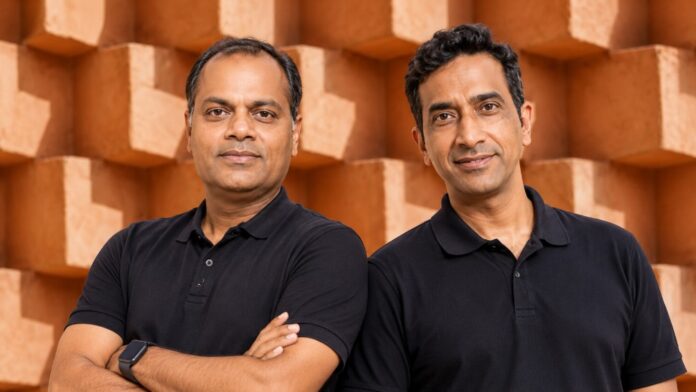
“Early-stage investors back the idea, and larger institutions tend to wait until a company is well past its hardest years. The growth stage in between, where technology turns into a business, has had very few committed investors. That is the gap we saw, and it is why we launched the Oister Deep Tech Fund,” said Rohit Bhayana, co-founder and co-CEO of Oister Global.
The fund will follow Oister’s glass-box investment approach, which emphasises transparency in its investment process. It will have a six-year tenure, with the option of extending it by up to two years, subject to investor approval.
For Oister, the investment thesis centres on the distinction between developing technology and building a sustainable business around it. Deep tech companies often require substantial capital to establish manufacturing capabilities, fulfil large customer orders, secure regulatory approvals and expand into international markets. These requirements can make their funding cycles considerably longer than those of conventional software businesses.
“Deep tech founders in India run a different race from software startups. They spend years building a product, then need serious capital to manufacture and sell it, and most growth investors are not set up to wait that long,” said Sandeep Sinha, co-founder and co-CEO of Oister Global.
He added that the fund intends to back established deep tech companies with strong founding teams and scientific and engineering capabilities, prioritising commercial applications and paying customers over technology that is still at the proof-of-concept stage.
Oister has already identified an initial shortlist of companies across its target sectors. Further investments will be evaluated as the fund is deployed.
The larger funding question
The fund’s launch also draws attention to a broader challenge facing India’s deep tech ecosystem. While the country has made progress in developing research-led and technology-intensive startups, the transition from innovation to industrial-scale production remains capital-intensive.
According to figures cited by Oister, Indian deep tech startups raised nearly $3 billion across 189 deals in 2025, marking the sector’s strongest year on record. However, the number of companies progressing to later funding stages remains relatively small.
The World Intellectual Property Organization’s Global Innovation Index 2026 data, as cited by Oister, identifies 453 Indian deep-science startups and spinouts, of which just 18 have reached late-stage funding. The corresponding figures are 12,752 companies and 1,980 late-stage ventures in the US, and 3,466 companies and 582 late-stage ventures in China.
The disparity points to a gap that goes beyond the availability of seed funding. India’s emerging deep tech companies will need investors willing to support longer development cycles and finance the transition from initial customer orders to repeatable production and global market expansion.
This is where the fund’s approach could be significant. By concentrating on companies that have moved beyond the technology validation stage, Oister is positioning itself around a relatively underfunded part of the deep tech investment cycle.
The larger test, however, will be whether patient growth capital can help these businesses build the manufacturing capacity, customer relationships and scale needed to compete in global technology markets. For India’s ambition to become a stronger player in critical technologies, the ability to finance this transition could prove as important as the innovation itself.

