

Bengaluru, September 7, 2026: Pixxel has raised $100 million in Series C funding, in what the company says is the largest funding round raised by an Indian space technology company.
Founded around hyperspectral imaging, the planetary infrastructure company Pixxel builds satellites that capture information across wavelengths beyond conventional optical imagery.
The company has since expanded into Earth intelligence software and satellite systems for commercial and sovereign missions, bringing sensors, software and spacecraft under its planetary infrastructure strategy.
“This new investment gives us the scale to turn that vision into planetary infrastructure,” said Awais Ahmed, founder and CEO of Pixxel. “More ways of sensing, more intelligence from every image, and more sovereign capability for nations.”
Four areas Pixxel plans to scale; From six satellites to a broader space platform
The planetary infrastructure firm will use the Series C capital to accelerate four key areas of its business.
First, it plans to expand its satellite sensing capabilities through Honeybee, its next-generation hyperspectral constellation. The satellites will extend imaging into the shortwave infrared (SWIR) spectrum and add technologies such as synthetic aperture radar (SAR) and ultra-high-resolution optical imaging.
Pixxel expects to launch the first Honeybee satellite in 2027. The company will also invest in Aurora, its Earth intelligence software platform. Aurora brings together data from different sensors and converts it into insights designed for use by governments, businesses and other institutions.
A third priority is sovereign Earth observation. Pixxel plans to work with governments on systems supporting civil, defence and intelligence missions, expanding its presence across international government markets.
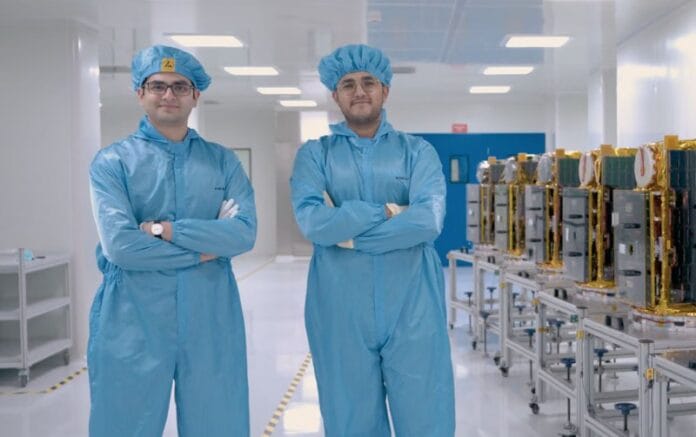
The company also plans to increase satellite manufacturing capacity in India and the US, allowing it to produce advanced spacecraft at higher volumes.
“Pixxel is exceptionally well-positioned across some of the most important themes shaping the future of the space sector,” said Mark Boggett, CEO of Seraphim Space. “We’re delighted to deepen our support as the company continues to scale.”
The funding follows a period of rapid expansion for the firm. Over the past two years, the company has deployed six Firefly satellites, which Pixxel describes as the world’s highest-resolution commercial hyperspectral constellation. It has also launched Aurora and expanded its work on government and defence programmes.
Pixxel has secured contracts with NASA and the National Reconnaissance Office (NRO), won multiple iDEX challenges from India’s Ministry of Defence and announced plans for an orbital data-centre demonstration satellite.
The company was also selected to lead development of India’s first public-private Earth observation constellation, comprising 12 satellites under IN-SPACe.
With the Series C, the space technology company is now moving from building individual satellite and imaging capabilities toward a larger infrastructure play spanning sensors, spacecraft, software and government systems.
The company aims to use that stack to provide faster and more detailed intelligence on changes across the planet, while strengthening its position in the increasingly competitive global space-tech market.
Temasek and Seraphim led the round, which also saw participation from new investors 360 ONE Asset and IMM Investment, alongside existing backers Radical Ventures, growX ventures and others.
The latest round takes the space technology company’s total funding to $195 million and gives the company fresh capital to expand beyond hyperspectral satellite imaging into a broader space and Earth intelligence platform.

