
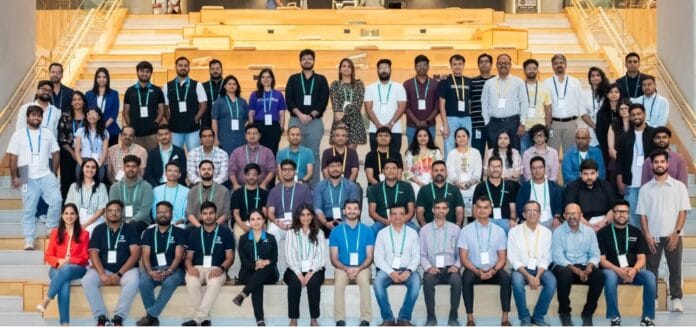
Thursday, July 9, 2026: Bengaluru: Google’s latest Google for Startups Accelerator: India 2026 cohort is more than just a list of promising startups. Selected from nearly 2,500 applications, the 20-company batch offers a snapshot of where India’s startup ecosystem is headed.
Rather than chasing broad consumer markets, this year’s cohort is dominated by startups solving industry-specific challenges in healthcare, finance, manufacturing, climate, cybersecurity and enterprise software. Here are five trends that stand out.
1. Enterprise software takes center stage at Google 2026 Startup Cohort
One of the biggest themes is the growing focus on enterprise technology. Nearly half of the selected startups are building products for businesses rather than consumers.
Companies such as CraftifAI, H2Loop AI, CreateOS by NodeOps, Pipeshift, PotpieAI and TartanHQ are developing tools that help enterprises improve software development, infrastructure management and workplace integration. The selection highlights increasing demand for products that improve productivity and automate complex business workflows.
2. Regulated industries are attracting more innovation
Several startups are tackling sectors where compliance, accuracy and regulation play a critical role.
Adalat AI is working to modernize India’s legal system, while OnFinanceAI and Binocs focus on financial compliance, risk management and advisory services. In healthcare, Aikenist aims to streamline radiology workflows, while FlexifyMe combines digital tools with physiotherapy and yoga-based treatment for chronic pain management.
The growing presence of startups serving regulated industries suggests founders are increasingly building solutions for sectors that have traditionally been slower to adopt new technology.
3. Climate and sustainability remain strong priorities
Climate-focused startups continue to secure attention, with Aurassure and Fitsol making this year’s cohort.
Aurassure provides hyperlocal environmental monitoring, while Fitsol helps enterprises track emissions, optimize logistics and manage sustainability reporting. Their inclusion reflects growing business demand for climate intelligence and environmental compliance as sustainability becomes a boardroom priority.
4. Industry-specific solutions are replacing one-size-fits-all products
Instead of building generic software, many startups are developing products designed for specific industries.
Jidoka focuses on manufacturing inspections, Proxgy works on connected industrial operations through wearable technology, Dodo Payments serves software businesses with merchant services, while Soundverse AI is building tools for music creators.
The trend shows founders are moving deeper into vertical markets where domain expertise can become a competitive advantage.
5. India’s startup ecosystem is becoming more technically ambitious
Perhaps the biggest takeaway is the increasing technical depth across the cohort.
Many of the selected startups are building foundational technologies, developer platforms and infrastructure products instead of standalone applications. This marks a noticeable shift from earlier startup waves that largely focused on consumer internet and marketplace businesses.
The Google for Startup accelerator, which begins with an in-person bootcamp at Google’s Bengaluru campus, will provide participating startups with technical mentorship, product guidance and go-to-market support over the next three months.
The bigger picture
Google’s 2026 accelerator cohort reflects a broader evolution in India’s startup landscape. Enterprise software, industrial technology, healthcare, climate innovation and financial infrastructure are emerging as key areas of innovation, with founders increasingly building products for global markets while solving complex business problems.
While the success of these startups will ultimately depend on execution and market adoption, this year’s cohort offers a clear indication of where the next phase of India’s startup growth is likely to come from, not consumer apps, but technologies built for industries that are undergoing rapid digital transformation.

