

Hyderabad, India, June 13, 2026:
Why Viyona Fintech Is Betting on Compliance, Infrastructure, and Rural India While Others Chase Urban Growth
India’s fintech industry has spent the last decade solving one problem exceptionally well: customer acquisition.
From QR codes at neighborhood stores to instant peer-to-peer transfers, digital payments have become synonymous with convenience. UPI transactions now number in the billions every month, and fintech giants have built massive consumer ecosystems around speed, rewards, and user experience.
Yet beneath the success of India’s digital payments revolution, a quieter transformation is underway. A new generation of fintech companies is emerging with a fundamentally different thesis.
Instead of asking how to acquire the next million customers, they are asking how to build the infrastructure capable of serving the next hundred million users, securely, compliantly, and sustainably.
Hyderabad-based Viyona Fintech belongs to this emerging category.
The Shift From Consumer Fintech to Financial Infrastructure
The first wave of Indian fintech was dominated by consumer-facing brands.
“The first decade of fintech was about adoption. The next decade will be about trust. Customers, banks, and regulators all expect the same thing: reliability. We believe compliance is not a cost of doing business, it’ is the foundation on which sustainable financial infrastructure is built.”
— Ravindranath Yarlagadda Founder, Viyona Fintech
Players such as PhonePe, Google Pay, Paytm, and others focused on making digital payments frictionless for urban India. Their success helped normalize UPI adoption and accelerate India’s transition toward a digital economy.
The second wave may look very different.
As regulators tighten oversight, cybersecurity threats increase, and financial inclusion becomes a national priority, the market is beginning to reward infrastructure, compliance, and reliability as much as growth.
Industry analysts increasingly point to a simple reality: payments are easy to launch, but difficult to scale responsibly.
Every transaction rides on a complex framework of regulations, settlement systems, authentication mechanisms, risk controls, banking integrations, and security protocols.
This is where Viyona’s strategy diverges from much of the industry. Rather than building a consumer app first and compliance later, the company appears to have built its business around regulatory-grade infrastructure from day one.
Its platform includes UPI switching capabilities, IMPS integrations, eKYC services, mandate management systems, and banking infrastructure solutions designed for enterprises operating within India’s regulated financial ecosystem.
In effect, Viyona is not merely building a Financial Technology product. It is building financial plumbing.
And history suggests that infrastructure businesses often create longer-term value than customer acquisition businesses.
Compliance Is Becoming a Competitive Moat
For years, compliance was viewed as a necessary expense. Today, it is increasingly becoming a strategic asset. Across global financial markets, regulators are demanding stronger governance standards, better risk management, enhanced cybersecurity controls, and greater operational transparency.
India is no exception. As digital transactions continue to grow exponentially, financial institutions are becoming increasingly selective about the technology partners they trust.
The implications are significant. Companies that treat compliance as an afterthought face mounting operational risks. Companies that build compliance into their architecture gain a structural advantage.
Viyona’s emphasis on certifications, secure payment infrastructure, audit readiness, and regulatory alignment reflects this changing reality. In a sector where trust determines longevity, compliance is evolving from a defensive requirement into a growth enabler.
The industry’s next leaders may not be the companies that grow the fastest. They may be the companies that regulators, banks, and enterprises trust the most.
The Rural Market Is Still Largely Underserved
While much of India’s Financial Technology innovation has focused on metropolitan consumers, a substantial opportunity remains outside urban centers. Rural India represents one of the largest untapped financial markets globally. The challenge has never been demand. The challenge has been accessibility.
Many fintech products were designed around assumptions common in urban environments:
- Continuous internet connectivity
- Smartphone-first behavior
- Formal banking relationships
- High digital literacy
- Established merchant ecosystems
These assumptions do not always hold true in rural communities. As a result, the next phase of fintech growth may require a different approach, one that combines technology infrastructure with on-ground financial access.
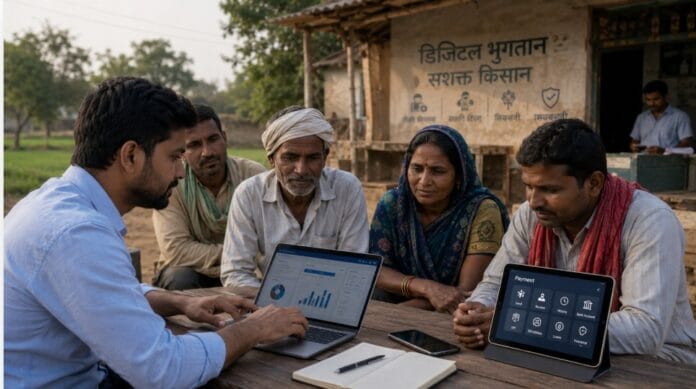
This is where Viyona’s positioning becomes particularly interesting. The company is pursuing a model centered on rural financial inclusion through payment services, assisted banking capabilities, merchant enablement, digital onboarding, and local distribution networks.
Rather than competing directly for affluent urban consumers, it is attempting to build pathways into markets that remain underpenetrated by mainstream fintech platforms.
From an analyst’s perspective, this represents a strategic differentiation rather than a niche focus. Urban fintech is increasingly crowded. Rural fintech remains largely underbuilt.
Competing in a Different Arena
Comparisons with major UPI platforms are inevitable. However, Viyona’s competitive positioning suggests it is operating in a different segment of the value chain.
| Category | Mainstream UPI Players | Viyona Fintech |
|---|---|---|
| Primary Focus | Consumer payments | Financial infrastructure |
| Growth Driver | User acquisition | Ecosystem enablement |
| Market Concentration | Urban and metro India | Rural and underserved markets |
| Core Differentiator | User experience | Compliance and infrastructure |
| Strategic Asset | Consumer scale | Regulatory readiness |
| Expansion Model | App-led growth | Institution-led growth |
This distinction is important.
The future of fintech may not be determined solely by who owns the customer interface. It may also be shaped by who owns the trusted infrastructure beneath it.
The Emerging Fintech Thesis
India’s fintech sector is entering a maturation phase. The industry’s first chapter was about adoption. The next chapter will likely be about resilience.
As digital finance becomes deeply integrated into everyday economic activity, the market will increasingly reward companies capable of delivering:
- Regulatory certainty
- Operational stability
- Secure infrastructure
- Financial inclusion
- Institutional trust
These qualities rarely generate headlines in the same way consumer growth metrics do. But they often determine which companies endure. Viewed through this lens, Viyona’s compliance-first philosophy appears less conservative and more strategic.
The company is positioning itself at the intersection of two powerful trends shaping Indian fintech’s next decade: the rise of infrastructure-led financial services and the expansion of digital finance into rural India.
Whether that strategy ultimately scales remains to be seen. What is clear, however, is that the rules of fintech competition are changing.
The next generation of winners may not be the companies that acquire customers first. They may be the companies that build trust first.
The objective is not merely to digitize transactions in rural markets, but to enable a more connected financial system that can support agriculture, allied services, and rural commerce in a scalable and regulated manner.
For industry observers, this signals a broader evolution in fintech priorities. The next phase of growth is likely to be defined not only by who acquires the most users, but by who builds the most reliable and extensible financial infrastructure. As fintech matures, value creation is gradually shifting from visible consumer interfaces to the invisible systems that power them.
In that transition, companies that prioritize compliance, infrastructure integrity, and institutional trust from the outset may be better positioned for long-term relevance, even if they operate outside the immediate spotlight of consumer fintech competition.
And in that emerging landscape, Viyona is making a calculated bet that compliance, infrastructure, and inclusion will matter more than customer acquisition alone.

