

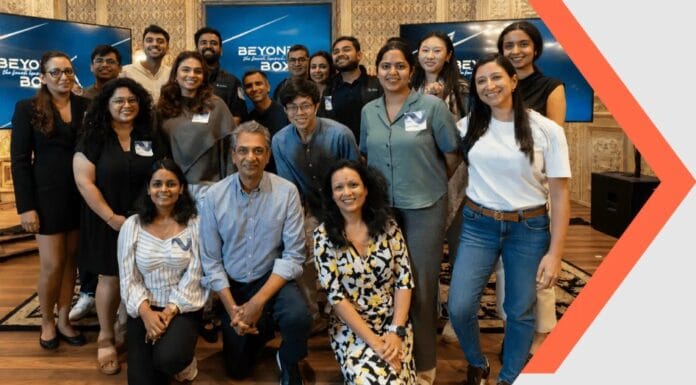
September 29, 2026: Peak XV Partners Surge investment initiative is putting more money behind startups at the point where they are still proving whether the business can become venture-scale.
The firm’s Surge seed programme has raised its maximum cheque to $5 million per startup, up from $3 million, as it introduces its 12th cohort of 18 companies. Peak XV says it has committed more than $50 million across the group, while the startups have together raised more than $90 million in seed funding.
The bigger cheques reflect a shift in what it now takes to build a company before a Series A. Rajan Anandan, managing director at Peak XV, said the bar for raising a Series A has risen significantly. That matters for founders because they are increasingly expected to show stronger product traction, technology and capital efficiency before the next institutional round becomes available.
There is another reason the investment size is changing. Some of the startups entering Surge are not lightweight software businesses that can get to market with a small team and modest infrastructure. The latest cohort includes companies working in deeptech, robotics and space, where building the underlying technology can require substantial capital well before meaningful revenue arrives.
The expansion of Surge also shows how Peak XV is trying to broaden its seed strategy beyond companies built primarily for India. More than half of the 18 startups in the new cohort are based in India, but only five are specifically targeting the Indian market. The rest are building for customers across global markets, with founders spread across locations ranging from San Francisco to Sydney.
Surge Goes Bigger: Peak XV Raises Startup Bet To $5M
That distinction is increasingly important for Indian startups. A company can be built in India while its opportunity lies almost entirely overseas, particularly in areas such as enterprise software, AI infrastructure, robotics and specialised technology. For investors, the location of the engineering team is therefore becoming less useful as a proxy for the size of the market a startup can address.
Surge has been moving in that direction since its launch in 2019, when Peak XV was still operating as Sequoia Capital India and Southeast Asia. The programme has backed more than 180 startups founded by entrepreneurs from more than 18 nationalities. Peak XV says its 10 largest Surge companies now generate more than $1 billion in combined annual revenue.
The firm also sees Surge as more than a one-time seed investment. Anandan described it as Peak XV’s main entry point for seed-stage companies, with the firm continuing to support founders as they raise subsequent rounds.
That model puts greater emphasis on the founders entering the programme. Peak XV says roughly half to 60% of a typical Surge cohort consists of people who have previously held operating roles at established technology companies. Repeat founders and highly specialised technical entrepreneurs are another major part of the pipeline.
The new group reflects that preference. Its companies are working across AI, robotics, healthcare, fintech, consumer products, music and space. Some are tackling AI safety and personal computing, while others are developing robots for underground infrastructure or satellites capable of detecting radio-frequency signals from orbit.
For founders, the most significant change may therefore not simply be the jump from a $3 million to a $5 million maximum investment. It signals Peak XV’s willingness to fund companies earlier while they tackle problems that require more time and money to reach the milestones investors increasingly expect before a Series A.
In a seed market where the distance to the next funding round has become harder to predict, having enough capital to reach that milestone could become just as important as getting the initial cheque.

