

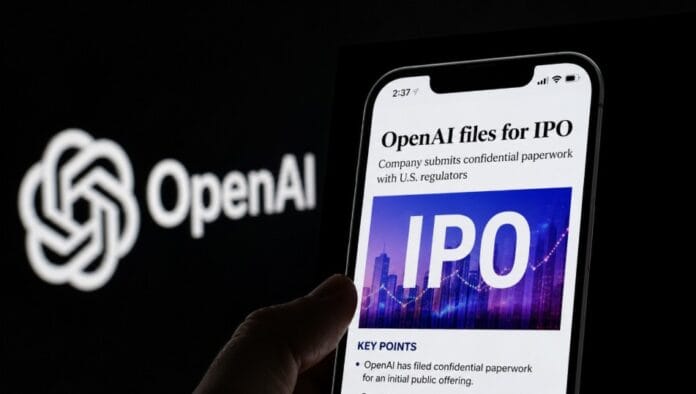
Tuesday, June 8, 2026: OpenAI’s confidential filing for an initial public offering is being viewed as a watershed moment for the technology industry, signalling that some of Silicon Valley’s most valuable private companies are preparing to face a very different audience: public market investors.
The move comes days after Anthropic filed confidential paperwork of its own, setting up what could become one of the most closely watched listings cycles in recent technology history.
For years, investors rewarded these companies for growth, user adoption, and technological breakthroughs. Public markets tend to focus on a different set of questions: revenue quality, profitability, customer concentration, governance, and long-term sustainability.
That shift could reshape how the industry is valued.
Until now, the sector’s rapid ascent has been fuelled by unprecedented levels of private capital. Venture investors largely backed a future vision, allowing companies to scale aggressively, invest heavily in infrastructure, and prioritise market leadership.
Public shareholders typically demand greater visibility into how those investments translate into durable businesses.
The timing is significant for OpenAI, IPO Vision
Technology markets have spent the past two years chasing growth stories built around new computing platforms and enterprise transformation. As some of the sector’s largest private players prepare for public listings, attention is likely to shift from product capabilities to financial fundamentals.
Investors will be looking closely at OpenAI ‘s operating costs, infrastructure spending, revenue concentration, enterprise contracts, and pathways to profitability.
The listings may also create a benchmark for the broader startup ecosystem.
Private valuations across the technology sector have surged in recent years, often with limited public disclosure. IPO filings provide a rare window into how these businesses actually operate, what drives their revenues, and how much capital is required to sustain growth.
For founders and investors, the filings from OpenAI could become a reference point for future funding rounds, exits, and valuation expectations.
The implications extend beyond capital markets.
Many large enterprises now depend on these platforms for software development, customer engagement, workflow automation, and productivity tools. As these companies enter public markets, transparency, governance, and operational resilience are likely to become increasingly important considerations for customers.
In many ways, the upcoming listings represent the industry’s transition from experimentation to infrastructure.
The next chapter will be less about potential and more about performance.
Wall Street is preparing to ask questions that private markets rarely do.
The answers could shape the next decade of technology investing.

