May 30, 2026: Most startup founders spend years identifying a problem worth solving. For 19-year-old Adya Anubhuti, the problem was something she lived with every day: ADHD
As a freshman at the University of California, Davis, Adya was juggling a demanding academic schedule, neuroscience research, community advocacy, and student life. Despite maintaining a 4.0 GPA, she often found herself confronting a challenge familiar to millions of people with Attention Deficit Hyperactivity Disorder (ADHD): not a lack of ambition or ability, but the invisible friction involved in getting started, staying organized, and following through.
The tools that promised productivity weren’t helping.
Many were designed for linear workflows and conventional work habits. Few accounted for the reality of neurodivergent thinking, where task paralysis, overwhelm, distraction, and mental overload can make even simple routines feel complex.
Instead of accepting the limitation, Adya decided to build something different.
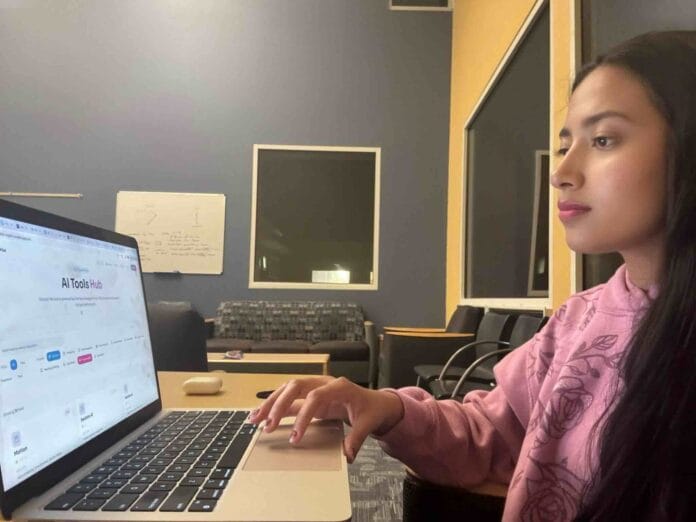
The result is ADHD Copilot, an AI-powered platform designed to help people with ADHD navigate productivity, focus, and daily decision-making through tools built with neurodivergent users in mind.
ADHD Copilot: Building From Experience, Not Assumptions
The current AI boom has produced thousands of products designed to make people more productive.
Yet many of these tools are built around a simple assumption: that everyone processes information, organizes tasks, and approaches work in roughly the same way.
For Adya, that assumption missed the point. “I built ADHD Copilot not just as a product, but from navigating systems that were not designed for how my brain works,” she explains.
Like many people with ADHD, she found that the hardest challenge was not necessarily completing tasks. It was overcoming the mental barriers that appear before the work even begins.
Rather than designing another generic productivity application, she focused on creating a platform that could reduce cognitive overload and decision fatigue—two common challenges experienced by neurodivergent individuals.
The idea quickly resonated.
Within months of launch, ADHD Copilot began attracting users looking for a more personalized approach to productivity, while building an online community of more than 3,500 followers through educational and relatable ADHD-focused content.
Where Neuroscience Meets Artificial Intelligence
What makes Adya’s story particularly notable is the intersection of disciplines shaping her work.
While building a startup, she is also a Cognitive Science major and research assistant at the UC Davis MIND Institute’s Memory and Development Lab, where she works with developmental neuroscience studies, MRI administration, and neuroimaging data.
At the same time, she serves as a community representative for the Alzheimer’s Association, advocating for research funding, organizing awareness initiatives, and engaging directly with patients and families.
These experiences have given her a perspective that extends beyond technology.
“Working in neuroscience taught me the importance of precision and data integrity,” she says. “But working with Alzheimer’s patients and families showed me the human side—the need for tools that actually meet people where they are.”
That philosophy is increasingly visible across the next generation of health-tech and AI startups.
Rather than building technology first and searching for users later, many young founders are building from lived experience, creating products that address needs they understand personally.
What ADHD Copilot Actually Does
At its core, ADHD Copilot functions as a centralized ecosystem for neurodivergent productivity.
The platform brings together more than 50 AI tools and resources into a single interface, reducing the need for users to navigate dozens of separate applications.
Its conversational AI system helps users identify relevant tools, organize workflows, and manage executive functioning challenges such as task paralysis, prioritization, focus, and overwhelm.
By simplifying access and reducing decision fatigue, the platform aims to make productivity technology more accessible for individuals whose needs are often overlooked by mainstream software.
The broader goal is not simply helping people work faster. It is helping people work in ways that align with how their minds naturally operate.
A Bigger Shift in AI Innovation
Adya’s journey reflects a larger trend emerging across the startup ecosystem.
For years, technology companies pursued one-size-fits-all solutions. Today, AI is making personalization possible at a scale that was previously unimaginable.
That shift is creating opportunities for founders who understand communities that have historically been underserved by technology—from people with disabilities and chronic health conditions to neurodivergent individuals and aging populations.
In many ways, ADHD Copilot represents more than a startup. It represents a new philosophy of innovation: one where lived experience becomes a competitive advantage and where accessibility is treated not as an afterthought, but as a design principle.
As artificial intelligence becomes increasingly integrated into everyday life, the next wave of breakthrough products may not come from asking how technology can serve the average user.
They may come from asking how technology can better serve those who have been overlooked.
For Adya Anubhuti, that question started with her own experience.
Today, it is helping shape a platform designed to support thousands of others navigating similar challenges.
And perhaps that is where the most meaningful innovations begin, not with technology itself, but with a deeper understanding of the people it aims to serve.
Sign up for free to experience the app – https://adhd-copilot.lovable.app/

