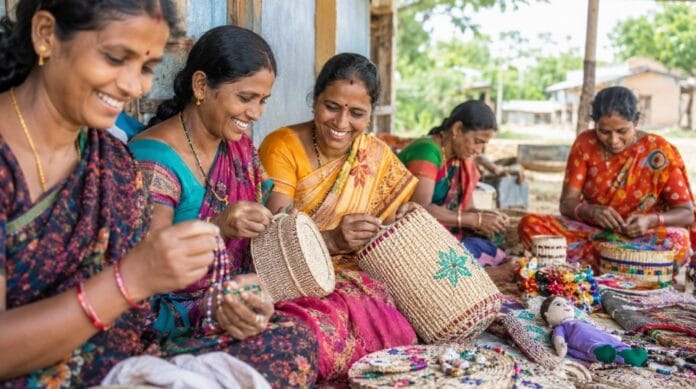
Monday, June 15, 2026: India’s rural entrepreneurship story is entering a new phase with SHE-MART and new fulfilment centers. For years, Self-Help Groups (SHGs) have focused on production, livelihoods, and financial inclusion. The next challenge is helping these businesses reach larger markets consistently and profitably.
The Ministry of Rural Development is now proposing a nationwide marketing and distribution ecosystem aimed at supporting its ambitious goal of creating 6 crore Lakhpati Didis.
Among the key initiatives under consideration:
• 700 SHE-MART retail outlets in high-potential commercial locations
• 1,000 District Fulfilment Centres to strengthen distribution and logistics
• Centres of Excellence for product innovation, packaging, design, and quality enhancement
• Stronger state-level federations to support SHG-led enterprises
• Expansion of SARAS Melas to increase visibility and sales opportunities
• A redesigned e-SARAS platform evolving into a multi-vendor digital marketplace
• Partnerships with digital commerce networks and technology platforms to improve market access
The Government Wants 6 Crore Lakhpati Didis. The SHE-MART Marketing Push Has Begun.
Perhaps the most significant shift is the move from viewing SHGs as beneficiaries to positioning them as entrepreneurs and business owners capable of serving organized retail and digital markets.
The government is also working toward a unified national identity for Saras Aajeevika products, bringing together fragmented branding under a single market-facing platform. The objective is clear: improve visibility, strengthen product positioning, and help rural enterprises compete in premium domestic and global markets.
If executed effectively, the initiative could create one of India’s largest women-led enterprise ecosystems, connecting millions of rural producers with modern retail channels, e-commerce platforms, and institutional buyers.
The success of the Lakhpati Didi mission may ultimately depend not just on production or financing, but on whether rural entrepreneurs can consistently access customers at scale.
That makes market access, branding, logistics, and digital commerce the next frontier of rural development.

