

THESTARTUPSTARS LENS · DATA PRIVACY & AI · MAY 25, 2026
Pronto isn not just cleaning your kitchen. It may be teaching robots how to do it. The real scandal here isn’t that Pronto has cameras in homes. The real scandal is that this was buried in an investor memo, not a customer notification.
This was never about your maid. It was about your data.
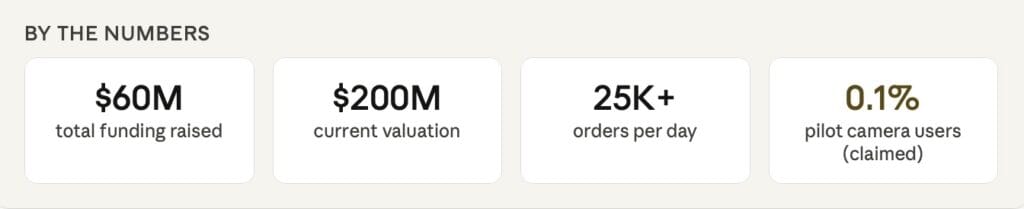
Bengaluru-based home services startup Pronto burst onto the scene in 2025 as an app that sends trained, verified domestic help to your door in under 10 minutes. Within months it was handling 18,000 daily bookings, had raised nearly $60 million in VC funding, and watched its valuation balloon to $200 million, an 8x jump in under a year. Founder Anjali Sardana was the darling of the India startup circuit.
But last week, a leaked investor memo from Glade Brook Capital changed the entire narrative. The document, reviewed by Entrackr, stated plainly that “Pronto is seeking to formalize India’s vast informal labor markets and in the process generate data to help train physical AI and robotics”, and that the company is already “piloting real world training data with leading physical AI labs.”
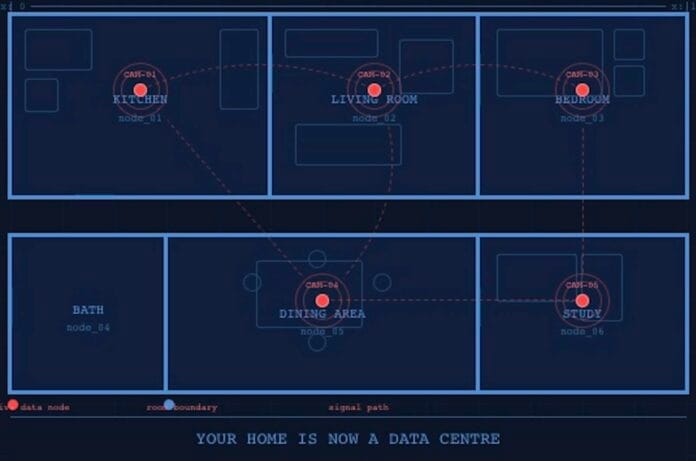
Let that sink in. The “Pro” who comes to wash your dishes may also be filming your kitchen , your countertops, your fridge layout, how you store your pressure cooker , to train the next generation of domestic robots.
BY THE NUMBERS
The clarification that raised more questions than it answered
Pronto’s response was swift. The company said cameras are opt-in only, cover just 0.1% of customers, and that consent is reaffirmed before every single booking. Footage, they claim, is deleted within 48 hours. Faces and identifying details are blurred. Nobody but the customer can access it.
Here’s the problem: if footage is truly deleted within 48 hours and only accessible by the customer, how is it simultaneously serving as “real-world training data” for Physical AI labs? AI training data doesn’t just pass through , it gets curated, annotated, stored, and structured. These two claims cannot both be true at the same time.
Pronto wants it both ways: the consumer-safe optics of “it’s just for your records” and the investor-exciting promise of “we’re building a data layer for robotics.” That’s not a clarification. That’s a contradiction.
India’s DPDP Act draws a line Pronto may have crossed
Under India’s Digital Personal Data Protection Act of 2023, consent must be specific and purpose-bound. Agreeing to a recording for quality monitoring is legally distinct from agreeing to have that recording used as training material for a foreign robotics lab. The law doesn’t allow consent to quietly shape-shift as business models evolve.
The investor memo doesn’t talk about “quality improvement.” It talks about commercialising a data strategy. That’s a fundamentally different purpose , and one customers likely never understood they were signing up for.
The bigger story: India as the world’s robotics training ground
Step back from Pronto for a moment. Physical AI , the technology that powers humanoid robots and automated environments , needs real-world behavioural data. Not simulations. Not synthetic datasets. It needs footage of actual human beings performing domestic tasks in actual homes.
India is uniquely positioned to supply this at scale. Affordable labour, massive urban density, and a culture where domestic help is standard practice across middle-class households , Pronto’s network isn’t just a gig economy play. In the eyes of Silicon Valley investors, it’s a data pipeline into millions of Indian homes that Western robotics companies could never otherwise access.
EDITOR’S CONCERN
If Indian household behaviour becomes training data for foreign robotics systems — who owns it, who profits from it, and who can ever opt out? India’s informal labour market is being formalised not for workers’ benefit, but to extract value from how they work.
Urban Company seized the moment, and that tells us something
Urban Company CEO Abhiraj Singh Bhal moved fast. He posted publicly that Urban Company has never, does not, and will never engage in in-home recording of any kind, calling customer trust “paramount.” Smart PR, yes , but also a signal that the industry itself knows this line exists, and that crossing it is costly.
The fact that a competitor immediately distanced itself is a tacit admission: what Pronto is doing — even if technically consent-based , crosses a social contract that customers never fully signed on paper.
What investors see that customers don’t
Pronto’s investors include Glade Brook Capital, General Catalyst, Bain Capital Ventures, and Lachy Groom , an investor also connected to Physical Intelligence, a company building general-purpose AI for robots. Pronto says there’s no evidence of data being funnelled to affiliated companies. Maybe not today.
But the overlap is too neat to ignore. The investor who funds Physical Intelligence also funds the startup collecting physical AI training data inside Indian homes. Whether or not there’s a legal line being crossed, there is clearly a commercial incentive that customers were never told about.
The question every founder building in this space must now answer
Pronto is not alone in this dilemma. As the Physical AI gold rush accelerates globally, every platform that accesses real-world environments , home services, elder care, logistics, retail , will face the same temptation. Your operational data is also training data. The question is whether you tell your customers that.
Pronto says its workers “get to participate in the AI economy directly and earn from the data their work generates.” Noble framing. But participation without fully informed consent isn’t participation, it’s extraction dressed in the language of empowerment.
Bottom line: Pronto’s cameras aren’t the story. The story is a $200 million company discovering that its most valuable product isn’t the service it provides — it’s the data it collects while providing it. The line between convenience platform and AI infrastructure is disappearing. Customers deserve to know which side of that line they’re standing on.

